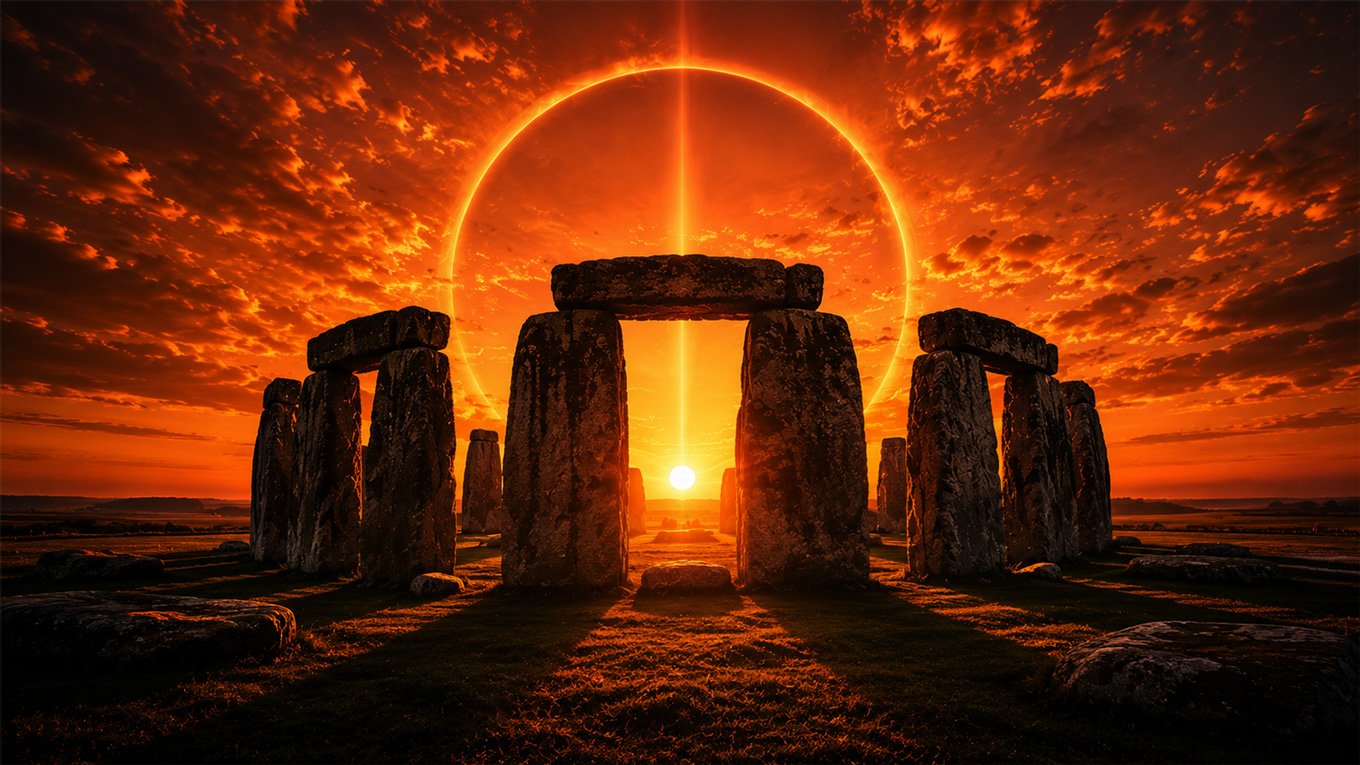
Something about this year’s Summer Solstice feels different—like Mother Earth herself is asking us to slow down long enough to hear what our soul has been trying to say all along.
Summer days are here!
Summer kicks off with the Solstice on Sunday, June 21, 2026, heralding the astronomical start of the season in the Northern Hemisphere.
There’s something undeniably powerful about Summer Solstice 2026—as if Mother Earth herself is pulsing with a louder, more magnetic energy than usual. This sacred turning point marks the longest day of the year, but spiritually, it’s also a reminder that your light was never meant to stay hidden. People everywhere may suddenly feel a deeper urge to reconnect with nature, protect their peace, and finally choose the life that feels aligned instead of merely acceptable. The Universe is amplifying courage, truth, and emotional clarity right now. And for many, this solstice won’t just feel like a seasonal shift—it will feel like the beginning of a completely new chapter.
What exactly is the Summer Solstice?
Is it really the longest day of the year?
Embrace the magic of the Solstice with intriguing insights and charming folklore.
Related: June’s New Moon in Gemini Is Asking Us to Lead with Our Hearts
Jupiter in Leo 2026: Playing Small Is No Longer an Option
Mercury Retrograde in Cancer, 2026: Emotional Clarity in Disguise
June 2026 Astrology Through Dates: Mercury Retrograde Is Back, Baby!
June Horoscope 2026: Brace Yourself for an Exciting Summer!
The June Solstice
In the Northern Hemisphere, the June Solstice, also known as the Summer Solstice, marks the moment when the Sun takes its highest journey across the sky, reaching its northernmost point. This signifies the astronomical start of Summer in the Northern Hemisphere. (In the Southern Hemisphere, the June Solstice signals the beginning of Winter, as the Sun reaches its lowest position in the sky.)
When is the Summer Solstice?
The June Solstice 2026 takes place on Sunday, June 21, at 4:24 a.m. ET/10:24 a.m. CET. The Solstice signals the official start of Summer in the Northern Hemisphere, happening when Earth reaches the point in its orbit where the North Pole tilts at its maximum angle of about 23.5 degrees toward the Sun. This alignment brings us the longest day and the shortest night of the entire year. (By longest “day,” we refer to the longest stretch of daylight hours.) During the June Solstice, the Northern Hemisphere basks in sunlight at its most direct angle of the entire year.
In the Southern Hemisphere, the June Solstice signals the start of Winter.
What Is the Summer Solstice?
In the Northern Hemisphere, the June Solstice, also known as the Summer Solstice, marks the moment when the Sun ascends to its peak and furthest point in the sky. It signifies the beginning of Summer in the Northern Hemisphere. In the Southern Hemisphere, the June Solstice signifies the Sun reaching its lowest point in the sky, heralding the onset of Winter.
“Solstice” is derived from the Latin terms “Sol,” meaning “Sun,” and “sistere,” which translates to “stand still.” Because of the tilt of Earth’s axis, the Sun’s position on the horizon changes daily. Each morning and evening, its rise and set points shift north or south as our planet orbits the Sun throughout the year. Additionally, the Sun’s path in the sky shifts higher or lower as the year progresses. The June Solstice holds great importance as it marks the moment when the Sun ascends to its highest position in the sky. During this time, the Sun’s trajectory remains constant for a short while, creating a unique celestial phenomenon.
Following the Solstice, the Sun seems to change its path and move in the opposite direction. The motion discussed here pertains to the Sun’s visible trajectory in the sky when observed at the same time each day, such as during local noon. Throughout the year, its trajectory creates a unique, elongated figure eight, known as an analemma. Certainly, the Sun remains stationary in its own cosmic dance (unless you think about its journey around the Milky Way); the shifts we observe from our vantage point on Earth are due to the tilt of our planet’s axis during its orbit around the Sun, combined with the fact that Earth’s path is elliptical rather than perfectly circular.
See Also: Embrace the Truth: Simple 9-Step Ritual for the Gemini New Moon
Mercury in Cancer 2026: Emotional Empathy & Intuitive Messaging
Venus in Leo 2026: Get Ready for Big, Bold Love
Uranus in Gemini 2026-2033: Life Will Never be the Same Again
Pluto Retrograde in Aquarius: Less Forward Motion, More Internal Excavation
Does the Solstice Always Takes Place on the Same Day?
The June Solstice isn’t tied to a fixed calendar date or time; it hinges on the moment the Sun ascends to its highest point north of the celestial equator. Consequently, the Solstice will not consistently fall on the same date. At present, it oscillates between June 20, 21, and 22.
The Longest Day of the Year
The Summer Solstice marks the day when we bask in the most sunlight of the year. Observe how the Sun reaches its peak in the sky during the solstice; its rays hit the Earth at a more direct angle, resulting in the effective warming we refer to as “Summer.”
In regions along the Tropic of Cancer and further north, the Sun reaches its zenith during the June Solstice. This is the moment when your shadow—measured at local solar noon, not by the clock—will be at its briefest for the entire year. Remarkably, at the Tropic of Cancer, you might even find that there’s no shadow at all!
Local noon occurs when the Sun reaches its peak position in the sky, crossing the local meridian, which is an imaginary line connecting the North and South poles.
In the Southern Hemisphere, the June Solstice signifies the shortest day of the year, heralding the onset of Winter.
Is the Summer Solstice the First Day of Summer?
Absolutely, and not quite… Ultimately, it hinges on whether we’re discussing the meteorological or astronomical start of the season. Many meteorologists categorize the year into four distinct seasons, aligning them with specific months and temperature patterns. This approach facilitates a more streamlined comparison and organization of climate data. In this framework, Summer kicks off on June 1 and wraps up on August 31. Consequently, the Summer Solstice isn’t recognized as the official start of Summer from a meteorological perspective.
Astronomically speaking, the first day of Summer is marked by the Sun reaching its zenith in the sky, a phenomenon that takes place during the Summer Solstice, which falls between June 20 and June 22. Thus, the Summer Solstice marks the official kickoff of Summer, at least from an astronomical perspective.
With that in mind, feel free to embrace whichever system resonates with you the most!
There’s an ongoing discussion about how the precise timing of the Solstice influences the onset of the season. For instance, if the Solstice happens at 11:30 P.M. on a Saturday, should we regard that Saturday as the first day of Summer, or should we look to the next day (Sunday) as the official start? It varies depending on the source you choose to follow.
Related: Lovelorn Venus in Hot-Blooded Leo Is Creating a Wild Romantic Frenzy
Chiron in Taurus 2026-2034: A New Healing Chapter Begins
Without a Doubt, the Mercury Retrograde Shadow Period Is Most Definitely a Thing
Uranus in Gemini: The 7-Year Shift That Will Awaken a Whole New You
Year of the Fire Horse 2026 Horoscopes: Fast Moves, Fierce Growth & Fearless Decisions
Why Doesn’t the Summer Solstice Fall on the Same Date Each Year?
The Summer Solstice in the Northern Hemisphere takes place between June 20 and 22. This happens partly due to the distinction between the Gregorian calendar, which typically consists of 365 days, and the tropical year, the duration it takes for Earth to complete one orbit around the Sun, which is approximately 365.242199 days. To make up for the missing fraction of days, the Gregorian calendar introduces a leap day approximately every four years, causing the date for Summer to shift backward. Nonetheless, the date can shift due to various factors, including the gravitational influence of the Moon and planets, along with the subtle wobble in Earth’s rotation.
What is Midsummer Day (June 24)?
Traditionally, Midsummer Day signified the halfway point of the growing season, nestled perfectly between the planting and harvest phases. It’s celebrated as one of the four pivotal days in various cultures—people come together to feast, dance, sing, and gear up for the sizzling summer days that lie ahead.
See Also: New Moon in Gemini, June 2026: Say ‘Yes’ to the Version of Yourself You’ve Been Avoiding
Let Your Flirtatious Side Come Out to Play as Venus Enters Leo
Current Cosmic Report: Where Are the Planets Right Now?
The Shadow Work Era Begins: 2026’s Pluto Retrograde in Aquarius Is Pulling Secrets into the Light
Mercury in Cancer 2026 Is Here: The Mind Slows Down So the Heart Can Speak
Saturn in Aries 2026-2028: Discipline Meets Fire in a Defining New Cycle
Celebrating the Solstice
Strawberry Picking!
Many people, such as the Swedes, mark the arrival of Summer by indulging in the season’s first strawberries. Enjoying strawberries and cream is an ideal way to honor the June Solstice, especially since June’s Full Moon is famously referred to as the Strawberry Moon. It usually aligned with the time when strawberries were ripening in what we now know as the northeastern and midwestern regions of the United States. Right now, in numerous states, it’s the ideal moment to indulge in some strawberry picking! Search for local farms where you can pick your own strawberries!
Host a Magical Solstice Evening Bonfire!
In many northern cultures, a vibrant celebration takes place on June 24, known as Midsummer’s Day. This festive occasion marks one of the four ancient quarter days of the year, bringing communities together in joyous revelry. The night before is known as Midsummer’s Eve, signifying the briefest night of the year. A popular way to celebrate is by throwing a bonfire party! Indeed, these northern folks have risen from the depths of some prolonged, shadowy Winters! In the breathtaking Austrian state of Tyrol, the mountainsides come alive with the glow of torches and bonfires, creating a mesmerizing spectacle that captivates the senses.
In the mythical tales of ancient Latvia, Midsummer’s Eve, celebrated on June 23, is a night filled with the warmth of bonfires and the quest for the elusive magical fern flower, believed to bestow good fortune. As dawn breaks, the ritual of washing one’s face in the morning dew completes this mystical experience.
Fun Fact: The Sun Sets More Slowly at the Solstice
Did you know that during a Solstice, the Sun sets at a slower pace, taking its time to dip below the horizon? This pertains to the perspective of the descending Sun. The more the Sun drifts away from due west on the horizon, the more gentle the angle of its descent becomes. (On the flip side, it moves quicker around the equinoxes.)
Bottom line, enjoy those breathtaking, love-filled Summer sunsets around the Solstice!
More for You: Why Is the Summer Solstice So Significant & How Does It Affect Your Life?
The Ultimate Guide to Every New & Full Moon in 2026: Twelve Lunar Chapters, Twenty-Four Sacred Moments
Major Astrological Events That Will Define 2026: A Year of Rare Alignments & Fated Turning Points
Mercury Retrograde 2026: Dates & Things to Keep in Mind
Under the Shadow of Fate: Welcome to the 2026 Eclipse Cycle!
2026 Horoscope: A Karmic Reset
If our work has made a positive impact on your life, we kindly ask for your support so we can continue our work. Thank you!
Now, you can follow Conscious Reminder on Facebook & Instagram!
∼If you like our article, give Conscious Reminder a thumbs up, and help us spread LOVE & LIGHT!∼